


Brake pad
This Brake Pad is a critical friction component in disc brake systems, responsible for generating braking force by pressing against the brake disc. Available in semi-metallic and ceramic formulations to meet different performance needs, Brake Pad features a high-friction friction layer, robust steel backing plate and noise-dampening shims. Key parameters include friction coefficient stable at 0.35–0.45, working temperature range from -20℃ up to 600℃, hardness controlled within HS 70–90, and excellent thermal fade resistance. It delivers consistent braking force, low noise, low dust and minimal wear on the brake disc. The under-layer adhesive ensures strong bonding strength, while chamfer and slot designs improve heat dissipation and reduce vibration. Each batch undergoes shear testing, wear testing and dynamometer testing to meet international safety standards. Brake Pad achieves stable and linear braking feel, effectively improves driving safety and is ideal for long-distance and heavy-load braking scenarios.


How to Choose the Right Brake Pad Friction Material
Different brake pad friction materials are designed for different braking characteristics, vehicle applications, and operating conditions. Understanding these differences helps distributors, importers, and automotive parts buyers select suitable brake pads for their target markets.
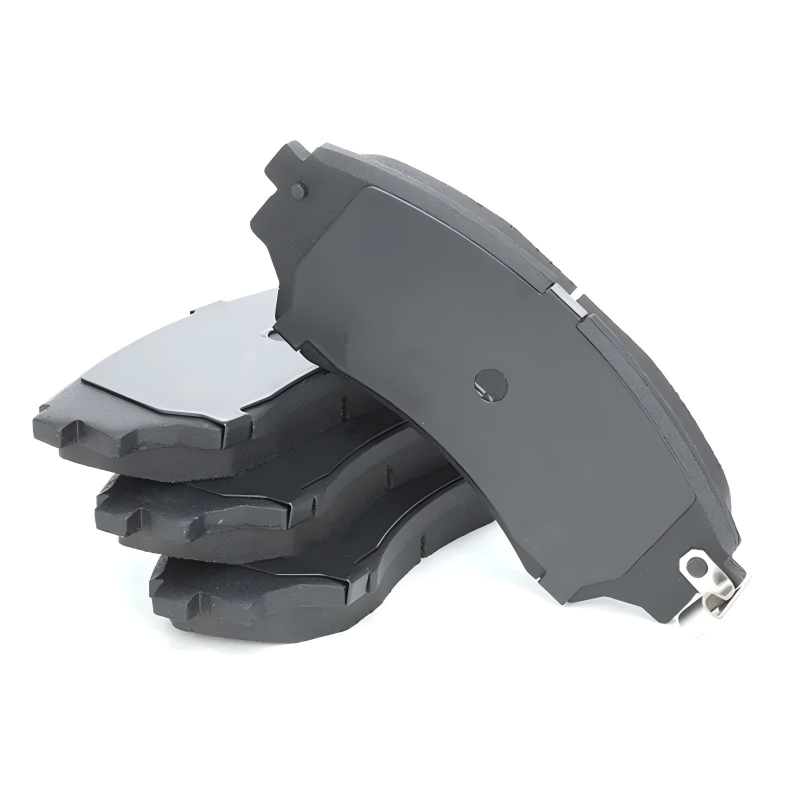
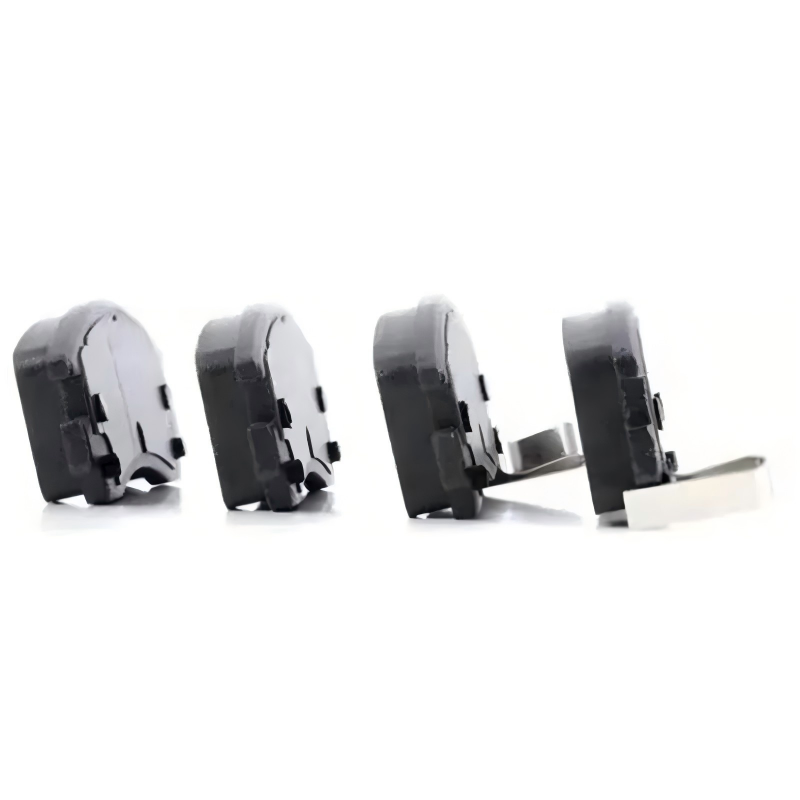
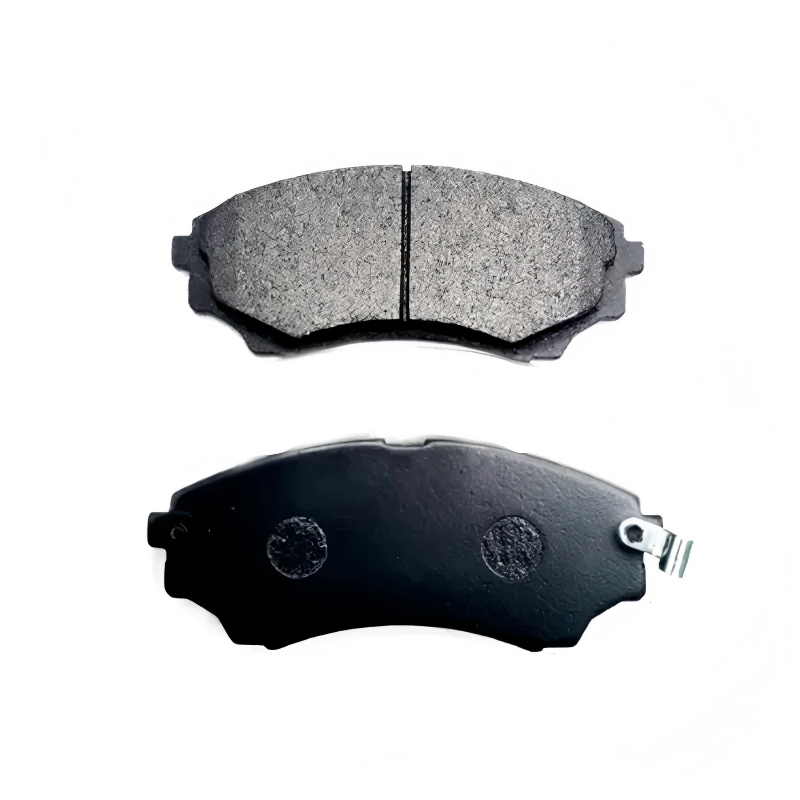
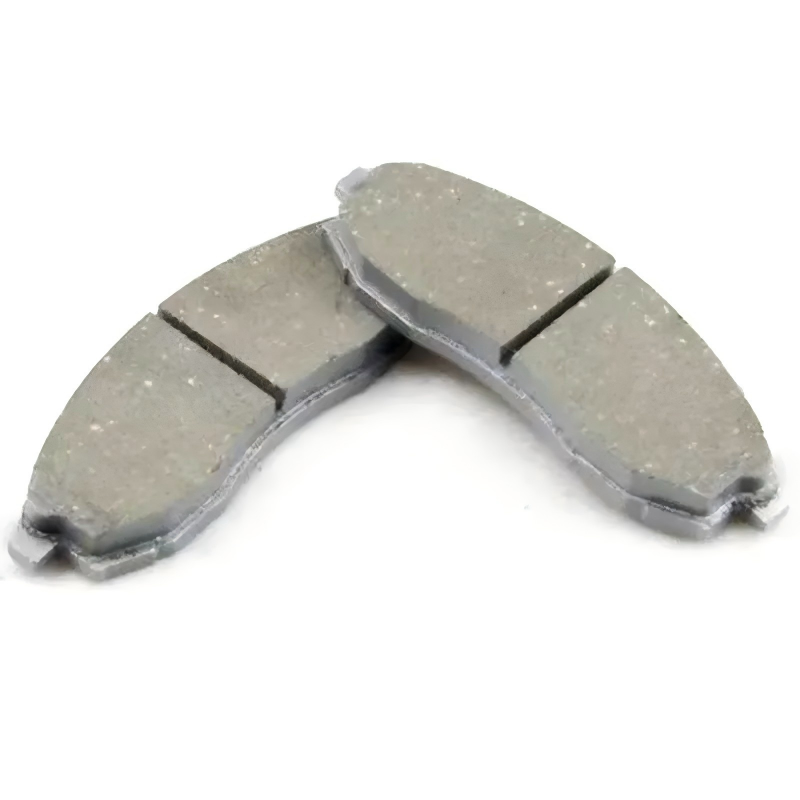
Selection note: No friction material is universally suitable for every vehicle. Actual braking performance depends on the complete formulation, pad geometry, rotor compatibility, operating temperature, vehicle weight, and braking duty cycle. Buyers should evaluate the specified product application rather than selecting a pad based on material name alone.
Brake Pads for Passenger Cars and Commercial Vehicles
Vehicle weight, braking frequency, operating temperature, and service conditions influence brake pad selection. Passenger car and commercial vehicle applications should therefore be evaluated separately.
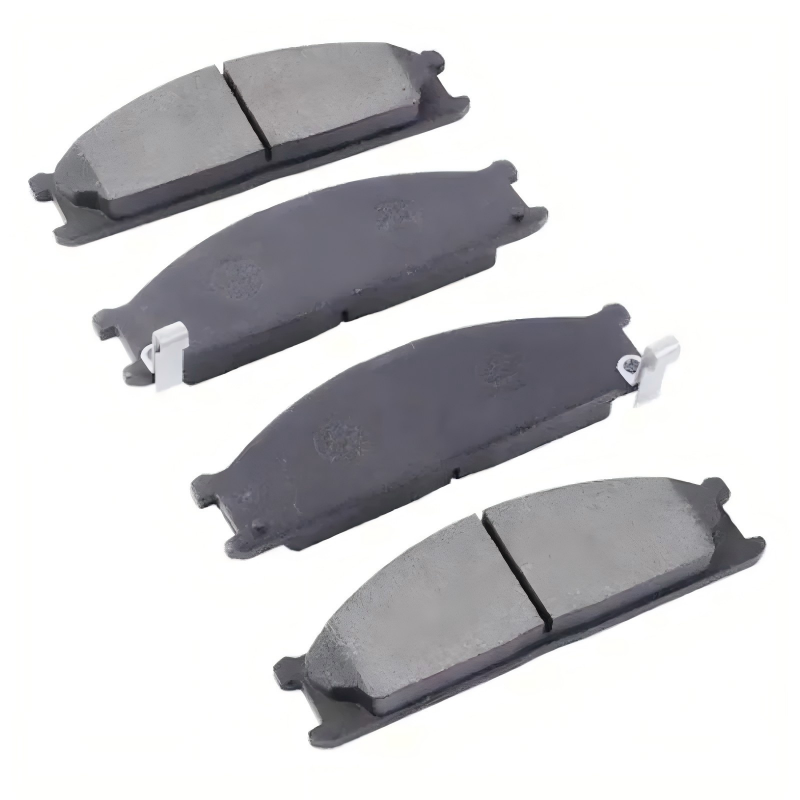
JUNZE commercial vehicle brake pad product
Passenger Car Brake Pads
Passenger car brake pads are selected according to vehicle specifications, axle position, driving conditions, and the required braking characteristics. Urban commuting, highway driving, and performance-oriented applications may place different demands on the friction formulation.
- Vehicle-specific pad dimensions and backing plate profiles.
- Suitable friction characteristics for the intended driving conditions.
- Noise and dust considerations for replacement markets.
- Compatibility with the original braking system.
Commercial Vehicle and Bus Brake Pads
Commercial vehicles may experience higher axle loads, more frequent braking, and greater thermal demands. Brake pad selection should consider vehicle operating weight, braking frequency, rotor specifications, and the expected maintenance cycle.
- Friction material suitable for the specified vehicle duty cycle.
- Correct pad geometry and backing plate dimensions.
- Thermal performance under the intended braking conditions.
- Wear characteristics and maintenance requirements.
Why Should Passenger Car and Bus Brake Pads Be Evaluated Differently?
A brake pad suitable for a passenger car cannot automatically be considered suitable for a bus. Vehicle mass, braking energy, friction surface dimensions, operating temperature, and braking frequency all affect the required pad design. For fleet and commercial vehicle purchases, application-specific compatibility should be confirmed before bulk ordering.
Brake Pad Structure, Backing Plate and OE Fitment
Brake pad compatibility depends on more than the friction material. The backing plate profile, pad dimensions, friction surface, and supporting hardware must work with the intended caliper and brake disc assembly.
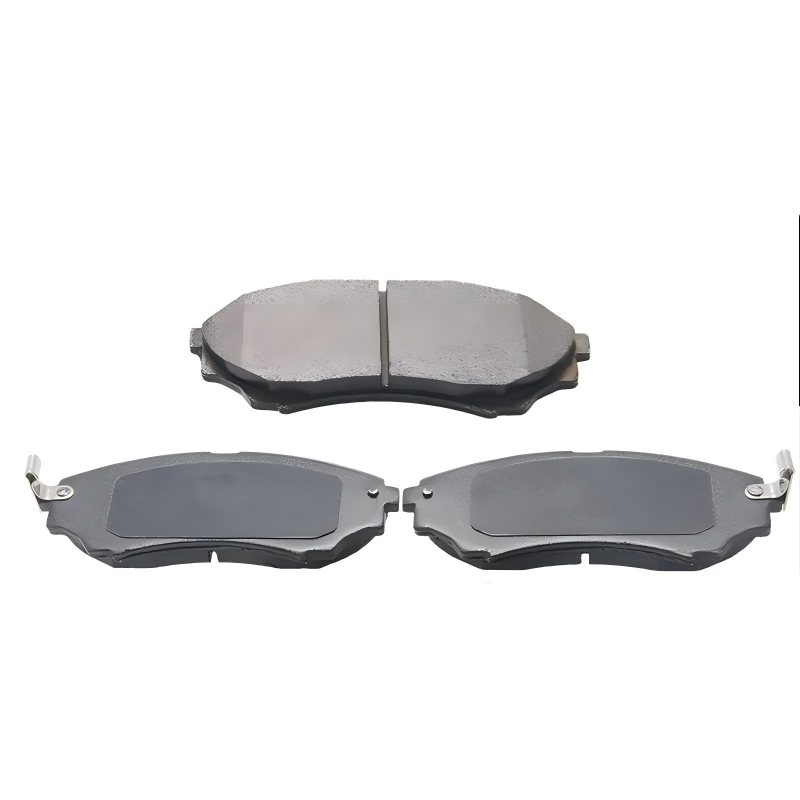
Actual brake pad product views from JUNZE
Main Components of a Disc Brake Pad
A typical disc brake pad assembly contains several functional components. Their dimensions, material properties, and assembly quality influence braking performance, noise behavior, and compatibility with the vehicle.
Friction Material
Contacts the rotating brake disc and generates friction during braking.
Steel Backing Plate
Supports the friction material and transfers the applied clamping force.
Underlayer
An intermediate material layer that can help improve bonding and influence friction characteristics.
Noise-Damping Shims
Additional damping components used in certain designs to help control vibration and braking noise.
What Should Buyers Check Before Approving Brake Pad Fitment?
For replacement brake pads and OEM supply projects, dimensional compatibility is essential. A similar-looking pad does not necessarily fit the same caliper or vehicle application.
| Inspection Item | What to Confirm | Why It Matters |
|---|---|---|
| Overall dimensions | Length, height and thickness | Ensures the pad fits the specified brake assembly. |
| Backing plate profile | Shape, tabs, holes and contact points | Prevents fitment and installation problems. |
| Friction material | Specified formulation and performance requirements | Supports application-specific braking requirements. |
| Accessory configuration | Shims, clips and wear indicators where applicable | Ensures the correct installation configuration. |
| Vehicle application | Vehicle model, year and axle position | Reduces incorrect replacement part selection. |
Brake Pad Quality Inspection for Bulk Purchasing
For distributors and automotive parts importers, brake pad quality evaluation should cover friction material, bonding integrity, dimensional consistency, and product traceability. A complete inspection approach helps reduce incorrect deliveries and inconsistent replacement performance.
Incoming Material Inspection
Check the specified friction material, backing plate material, and incoming component documentation against the approved product requirements.
Dimensional Inspection
Verify pad dimensions, backing plate profiles, friction layer thickness, and other critical dimensions against the approved drawings or specifications.
Bonding Integrity
Evaluate the bond between the friction material and backing plate. Shear strength testing can be used to assess bonding performance.
Friction Performance
Assess friction coefficient, temperature response, and wear behavior using appropriate product-specific test procedures.
Surface and Assembly Inspection
Examine the friction surface, backing plate, edges, and installed accessories for visible defects and assembly inconsistencies.
Batch Consistency
Compare product dimensions, material specifications, and identification information across production batches.
Relevant Quality Assurance Reference: ISO 15484
ISO 15484:2008 addresses product definition and quality assurance procedures for road vehicle brake lining friction materials. It provides a useful reference for evaluating friction material quality during product development and series production. Buyers should distinguish between using a standard as a technical reference and verifying that a particular supplier or product has formally demonstrated compliance.
What to Consider When Sourcing Brake Pads from a Manufacturer
Choosing a brake pad manufacturer involves more than comparing unit prices. Product compatibility, material specifications, production consistency, and supply arrangements all affect long-term purchasing decisions.
Product Coverage
Check whether the supplier can provide the required friction material types, vehicle applications, pad shapes, and OE reference numbers.
Technical Compatibility
Confirm product drawings, dimensions, friction specifications, axle position, and vehicle fitment before approving a production order.
Quality Documentation
Review applicable inspection records, material specifications, test reports, and product identification procedures.
Packaging and Identification
Check carton protection, product labels, part number identification, and packaging arrangements for wholesale distribution.
OEM and Customized Brake Pad Supply
We support customized automotive brake component projects based on customer drawings, samples, and vehicle model parameters. For brake pad sourcing, accurate technical information helps establish the correct product configuration before production.
Customization discussions may involve product specifications, compatible vehicle applications, brand identification, and packaging arrangements. Final customization scope and production feasibility should be confirmed for each specific brake pad project.
Frequently Asked Questions About Automotive Brake Pads
Find practical answers to common questions about brake pad material selection, OE compatibility, commercial vehicle applications, quality inspection, and wholesale sourcing.
1. Which brake pad material should distributors choose for a passenger car replacement market?
The choice depends on the target vehicle segment and customer priorities. Ceramic brake pads are commonly considered for markets emphasizing low dust and quiet operation. NAO formulations may suit applications where comfortable everyday braking is important. Low metallic pads can be considered when responsive initial braking is a priority, while semi-metallic pads are often evaluated for their balance of braking response and thermal characteristics. Distributors should also check vehicle compatibility, local requirements, and the manufacturer's application-specific specifications before adding a product to their catalog.
2. Are ceramic brake pads suitable for vehicles frequently driven on highways?
Ceramic brake pads can be suitable for highway applications when their friction characteristics, operating temperature range, and vehicle compatibility meet the specified requirements. However, material classification alone cannot determine whether a pad is suitable for sustained high-speed or heavy-load braking. Buyers should evaluate the actual product test data and ensure that the selected brake pad is matched to the vehicle's braking system.
3. Why should a bus fleet use application-specific heavy-duty brake pads?
Buses generally operate under different load and braking conditions from passenger cars. Frequent stops, passenger weight, route characteristics, and repeated heat generation influence brake pad requirements. Using a passenger car pad without confirming its suitability can result in an inappropriate friction and wear profile. Fleet operators should select brake pads according to the bus model, axle position, brake assembly, and actual operating duty cycle.
4. Can a brake pad with the correct dimensions still be incompatible with a vehicle?
Yes. Matching overall length, width, and thickness does not guarantee full compatibility. Backing plate profiles, retaining tabs, mounting positions, accessory configurations, and friction material specifications must also be considered. Buyers should verify the OE reference number, vehicle model, production year, axle position, and brake caliper configuration before approving a replacement brake pad.
5. What should importers check when a new brake pad sample arrives?
Start by comparing the sample with the approved drawing or reference product. Check overall dimensions, backing plate geometry, friction layer thickness, surface condition, and included accessories. Then review the material specification and available test documentation. If the sample is intended for an existing vehicle application, confirm the OE reference and conduct the appropriate fitment and technical evaluation before approving bulk production.
6. How can buyers evaluate the bonding quality between the friction material and steel backing plate?
Buyers can review the bonding process specifications and relevant shear strength test records. Shear testing evaluates the strength of the connection between the friction material and backing plate under a defined test procedure. SAE J840 provides a technical reference for this type of testing. However, a test result should be assessed against the agreed product requirements and acceptance criteria rather than treated as a universal indicator of complete brake pad performance.
7. Why can the same brake pad model produce different levels of noise or dust in different vehicles?
Brake noise and dust are influenced by more than the friction formulation. Rotor surface condition, caliper movement, pad installation, vibration, temperature, and the vehicle's braking system can all affect the result. Noise-damping shims, friction material composition, and pad geometry also play a role. When evaluating complaints from the aftermarket, distributors should consider the complete brake assembly and installation conditions rather than attributing every issue to the brake pad alone.
8. How should wholesalers manage multiple brake pad part numbers in one purchase order?
Each part number should have a clearly defined vehicle application, axle position, OE reference, product drawing, friction material specification, and packaging identification. Buyers should maintain a separate approval record for each product configuration to prevent similar-looking pads from being mixed. A structured part-number list also helps suppliers organize sampling, production planning, carton labeling, and shipment documentation for multi-model orders.
9. Can JUNZE support customized brake pads for an automotive parts brand?
We provide customized automotive brake component services based on customer drawings, samples, and vehicle model parameters. Our OEM/ODM cooperation can involve product specifications, brand identification, and packaging customization. For a brake pad project, the specific friction material, backing plate design, application compatibility, and production feasibility need to be confirmed before the project is finalized.
10. What information should buyers review before placing a repeat brake pad order?
Before placing a repeat order, compare the new production specifications with the previously approved version. Review part numbers, dimensions, friction material requirements, packaging details, and applicable inspection records. Buyers should also confirm whether any product changes have been introduced since the previous order. Maintaining approved samples, drawings, and product specifications helps distributors and importers improve consistency across multiple purchasing batches.
Explore Related Brake System Products
Explore our related automotive brake components and customized manufacturing services to support different vehicle braking system requirements.