


Brake shoes
This Brake Shoes is a key friction component for drum brake systems, used to generate braking force by pressing against the brake drum. Available in semi-metallic and ceramic-based friction materials to satisfy different load and usage scenarios, Brake Shoes consists of a high-strength stamped steel bracket, high-density friction layer and reliable rivet or adhesive fastening structure. Key parameters include stable friction coefficient at 0.32–0.42, operating temperature range from -30℃ to 550℃, friction layer hardness within HS 65–85, and excellent high-temperature fade resistance. It features stable braking performance, low wear rate, low noise and minimal dust emission. The reinforced bracket structure ensures high rigidity and stable fitting with the brake system. Each product is strictly tested for shear strength, wear resistance and dynamic braking performance in accordance with international automotive standards. Brake Shoes provides consistent and reliable braking output, prolongs service life and maintains stable performance under continuous heavy-duty braking conditions.


Brake Shoe Construction and Key Components
An automotive brake shoe combines a shaped steel support with a friction lining to generate braking force inside a drum brake. Understanding its construction helps distributors and replacement parts buyers evaluate product compatibility, assembly quality and service requirements.
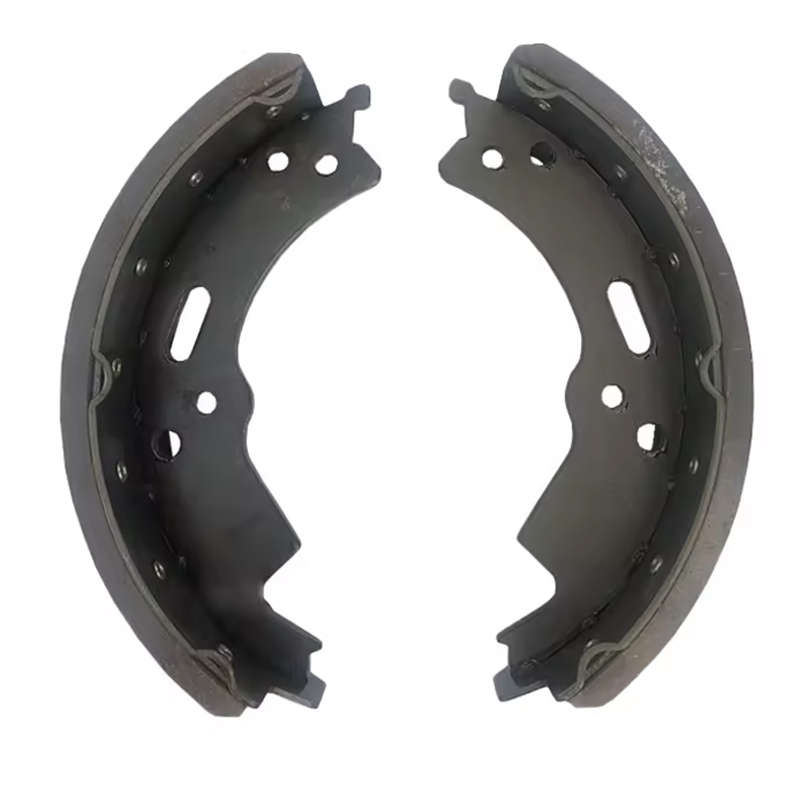
Main Parts of a Drum Brake Shoe
The brake shoe assembly is designed to maintain the correct shape and support the friction lining as braking force is applied. Its major elements have different structural functions.
Steel Shoe Table
The supporting plate provides the main structural base for the friction lining and helps maintain the required shoe profile.
Friction Lining
The lining contacts the inner surface of the rotating brake drum and converts mechanical motion into frictional braking force.
Web and Mounting Features
The shoe structure includes formed sections and mounting features that connect with the brake mechanism. Their geometry must match the intended brake assembly.
Lining Attachment
Riveting or adhesive bonding may be used to secure the friction lining, depending on the product design and approved manufacturing specification.
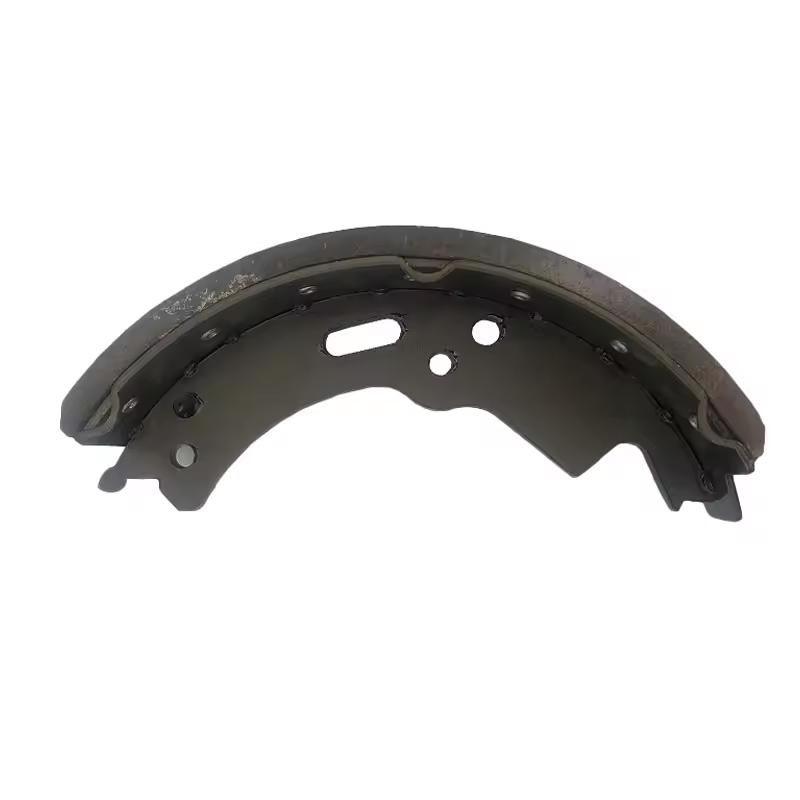
Why Does Brake Shoe Geometry Matter?
The shoe profile determines how the friction lining sits against the inner surface of the brake drum. Incorrect curvature, mounting position or lining dimensions can result in uneven contact, abnormal wear and inconsistent braking response.
For replacement and wholesale orders, the complete assembly should be evaluated rather than selecting a brake shoe based only on its external appearance.
Brake Shoe Friction Materials and Lining Attachment Methods
Friction material selection and lining attachment influence the suitability of a brake shoe for its intended operating conditions. Buyers should evaluate the complete friction assembly rather than relying on material names alone.
Semi-Metallic Friction Material
Semi-metallic friction formulations incorporate metallic constituents into a friction composite. Their braking behavior depends on the complete formulation, manufacturing process and application conditions.
When sourcing semi-metal brake shoes, check the approved friction specification, operating requirements and compatibility with the intended brake drum.
Ceramic-Based Friction Material
Ceramic-based friction formulations use ceramic constituents as part of the friction composite. Their actual friction behavior, wear characteristics and temperature response depend on the formulation.
Buyers should compare documented performance requirements and vehicle compatibility before choosing a ceramic-based brake shoe.
Common Brake Lining Attachment Methods
The friction lining must remain securely attached to the steel shoe throughout its intended service conditions. Two established attachment methods are mechanical riveting and adhesive bonding.
Riveted Brake Shoes
Rivets mechanically secure the friction lining to the shoe. Rivet selection, hole positioning, countersinking and fastening quality are important because the lining must remain properly retained during braking.
Bonded Brake Shoes
Adhesive bonding secures the friction lining to the shoe surface. The bonding process depends on suitable surface preparation, adhesive selection, controlled pressure and curing conditions.
Important Purchasing Consideration
Riveted and bonded brake shoes should not be treated as interchangeable without confirming the original equipment design and applicable technical requirements. The correct attachment method must be established by the approved product specification and validated for the intended application.
How to Select Compatible Brake Shoes for Replacement and Bulk Orders
Correct brake shoe selection requires more than matching a general product name. Vehicle application, OE reference, drum dimensions, shoe geometry and friction specifications should all be considered before confirming an order.
Five Important Brake Shoe Fitment Checks
OE Part Number
Use the original equipment reference to identify the intended replacement application and reduce the risk of selecting a visually similar but incompatible part.
Drum Inner Diameter
The shoe assembly must match the working diameter of the brake drum to establish suitable contact geometry and operating clearance.
Shoe Width and Profile
Compare the overall shoe dimensions, lining width, arc shape and support plate geometry with the approved replacement specification.
Mounting and Connection Points
Check the positions of mounting holes, support points, spring connections and other features that interface with the drum brake assembly.
Friction Specification
Verify the specified friction material, lining characteristics and applicable performance requirements for the intended vehicle and operating conditions.
Brake Shoe Purchasing Reference
The following reference can help automotive parts importers, wholesalers and distributors organize product information before approving samples or confirming repeat orders.
| Inspection Item | What to Verify | Purchasing Purpose |
|---|---|---|
| Product Identification | OE number, product reference and vehicle application | Reduce incorrect product selection |
| Dimensions | Shoe arc, width, mounting points and lining thickness | Confirm dimensional compatibility |
| Material | Approved friction formulation and steel support specification | Maintain product specification consistency |
| Assembly Quality | Lining attachment, positioning and structural condition | Check assembly reliability |
| Batch Consistency | Approved samples, inspection records and product identification | Support repeat purchasing and inventory management |
| Packaging | Product protection, labeling and carton identification | Facilitate warehouse and distribution operations |
Consistency Matters in Repeated Brake Shoe Orders
For distributors managing multiple brake shoe references, consistent product identification and approved specifications are essential. Each part number should correspond to its confirmed dimensions, friction material, vehicle application and packaging details.
We support OEM/ODM brake component projects based on customer drawings, physical samples and vehicle model parameters. Product specifications, development requirements and packaging arrangements can be discussed according to the confirmed project scope.
Frequently Asked Questions About Automotive Brake Shoes
These answers address common questions from automotive parts importers, wholesalers, distributors and OEM buyers about brake shoe selection, product compatibility, friction materials, installation and bulk purchasing.
1. How can buyers identify the correct brake shoes when the same vehicle model has multiple rear brake configurations?
A vehicle model name alone may not be sufficient because different production years, trims, axle configurations and brake system designs can use different shoe assemblies. Check the OE part number first, then verify the drum diameter, shoe width, arc profile, mounting points and friction lining specifications. For aftermarket sourcing, comparing the original sample or approved technical drawing is a practical way to reduce fitment errors.
2. What should distributors check when sourcing brake shoes for passenger cars and commercial vehicles?
Passenger car and commercial vehicle applications may have different structural, dimensional and friction requirements. Buyers should confirm the intended vehicle category, axle position, operating load, braking frequency and original brake assembly configuration. For commercial vehicle programs, pay particular attention to the approved friction specification and shoe construction. Do not assume that a brake shoe designed for a passenger car can be used in a heavier vehicle simply because the dimensions appear similar.
3. When should an importer choose semi-metallic rather than ceramic-based brake shoes?
The choice should be based on the vehicle manufacturer's requirements, friction performance specifications, operating temperature conditions and intended braking duty. Semi-metallic and ceramic-based formulations have different material compositions, but neither category automatically guarantees better performance in every application. Buyers should request the applicable technical specifications and test evidence for the actual product reference instead of choosing only by the material name.
4. Can new brake shoes be installed with an existing brake drum?
They can be used together only when the existing drum remains within the applicable service limits and its friction surface is suitable for the replacement shoes. Before installation, inspect the drum for excessive wear, scoring, cracking, distortion and dimensional irregularities. The drum's internal diameter and the shoe's contact profile must be compatible. A worn or damaged drum should not be reused simply to reduce replacement costs.
5. What problems can occur if the brake shoe friction lining is not securely attached?
Poor lining attachment can result in movement, separation or uneven contact between the friction material and steel support. This can affect braking consistency and create serious safety risks. For riveted assemblies, inspect rivet positioning and fastening quality. For bonded assemblies, evaluate the bonding process and relevant adhesion performance. The attachment method and acceptance criteria should follow the approved product design and applicable testing requirements.
6. Should left and right brake shoes be purchased as a matched axle set?
Yes, the left and right replacement shoes should follow the vehicle manufacturer's specified axle configuration and replacement procedure. Some brake assemblies use different primary and secondary shoes, so buyers should not assume every shoe in a set has an identical design. Confirm the complete set configuration, part numbers and installation positions before ordering. Replacing components in accordance with the vehicle service instructions helps maintain balanced braking performance.
7. What should a wholesaler inspect before approving a bulk shipment of brake shoes?
A bulk shipment should be checked against the approved sample and product specification. Important inspection points include shoe dimensions, arc profile, steel support condition, friction lining appearance, attachment quality, part number identification and packaging. Depending on the agreed product requirements, buyers may also request applicable material records and friction performance test documentation. Consistent inspection criteria help reduce product variation across different production batches.
8. What information helps reduce incorrect brake shoe orders for aftermarket distribution?
A clear product reference list is the starting point. Include OE numbers, vehicle make and model, production year, axle position, original product dimensions and available reference photographs or drawings. For distributors handling many vehicle applications, keeping these details linked to each SKU helps prevent confusion between similar-looking brake shoes. It also makes quotation, sample confirmation and repeat purchasing more efficient.
9. Can JUNZE develop customized brake shoes for an automotive brand or aftermarket distributor?
We provide OEM/ODM customization services for brake components based on customer drawings, physical samples and vehicle model parameters. For brake shoe projects, the specific development scope, product structure, friction material, dimensions and packaging requirements need to be reviewed and confirmed before production. Sample evaluation and specification approval should be completed before proceeding with a mass production arrangement.
10. What should buyers evaluate when selecting a long-term brake shoe manufacturer?
Evaluate the supplier's ability to identify the correct product application, maintain approved specifications, communicate technical details and support repeat orders. Buyers should also review available product documentation, sample quality, dimensional inspection procedures, friction material records and packaging arrangements. For customized projects, confirm how drawings, samples and product changes are reviewed and approved. A reliable supply relationship depends on technical consistency and clear production communication, not quotation price alone.