


Type E Air Conditioning Hose
This Type E Air Conditioning Hose is a high-performance pipeline specially designed for automotive air conditioning systems, used for efficient and stable transmission of refrigerants. Constructed with high-quality synthetic rubber and a four-layer reinforced structure including inner rubber layer, reinforcing layer, barrier layer and outer rubber layer, Type E Air Conditioning Hose features excellent pressure resistance, oil resistance, ozone resistance and aging resistance, with a wide working temperature range from -40℃ to 150℃. It has outstanding bending flexibility, strong anti-fatigue performance and reliable air tightness, effectively preventing refrigerant leakage under long-term operation and harsh working conditions. Strictly produced in line with international automotive air conditioning standards, it ensures stable performance under high and low temperature fluctuations and frequent vibration. Suitable for passenger cars, commercial vehicles, buses. Type E Air Conditioning Hose delivers consistent cooling efficiency, reduces system maintenance frequency and enhances the overall reliability of vehicle air conditioning systems.
Automotive AC Hose Construction and Layer Functions
Automotive air conditioning hoses use different material and reinforcement combinations to transport refrigerant under changing pressure, temperature and vibration conditions. Understanding the hose structure helps buyers evaluate product suitability and long-term reliability.
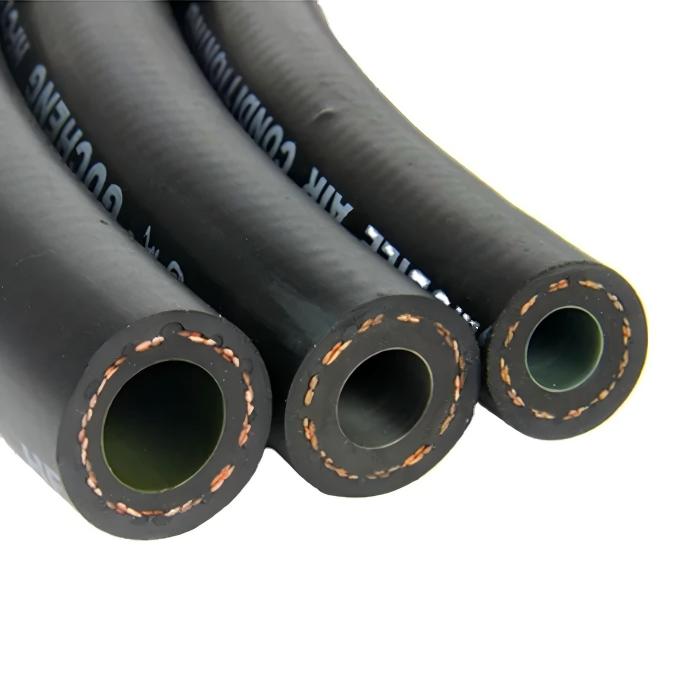
Automotive AC hose cross sections showing internal construction.
How Do the Different Layers Work?
A barrier-type automotive AC hose generally combines an inner refrigerant-resistant layer, reinforcement and an external protective layer. Depending on the model, additional rubber or protective layers may also be included.
- Inner barrier layer: Helps reduce refrigerant permeation and protects the refrigerant passage.
- Reinforcement layer: Provides structural support under internal pressure and repeated bending.
- Rubber intermediate layer: Contributes to flexibility and the bonding of the hose structure.
- Outer protective layer: Helps protect the hose against external abrasion, ozone and environmental exposure, depending on its material.
JUNZE product information: Our Type E air conditioning hose is described with a four-layer reinforced structure. Our bus AC hose information also identifies a four-layer construction using EPDM, PET reinforcement and a PA nylon barrier. Different models may have different layer configurations, so buyers should confirm the actual construction against the selected product specification.
How to Choose the Right Automotive AC Hose
Selecting an automotive air conditioning hose requires more than matching its outside appearance. Refrigerant compatibility, working pressure, internal diameter, temperature range and installation conditions all affect the correct product choice.
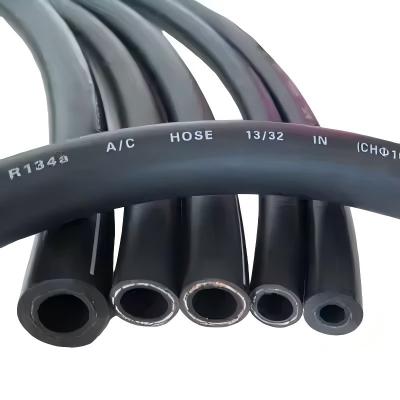
Different automotive AC hose diameters for different system requirements.
Five Factors to Check Before Ordering
- Refrigerant compatibility: Confirm whether the application uses R134a, R1234yf or another specified refrigerant. The hose and assembly must be suitable for the actual refrigerant and lubricant.
- Working and burst pressure: Check the required operating pressure and applicable test or burst requirements. High-pressure and low-pressure lines should not be treated as interchangeable.
- Inner diameter and outer diameter: Match the hose dimensions to the original system design, flow requirements and connection interfaces.
- Temperature range: Consider both the minimum and maximum temperatures encountered during vehicle operation, especially near engine compartments.
- Installation space and bending: Evaluate hose length, bend radius, routing clearance and potential contact with nearby components.
Hose Selection Reference
| Selection factor | What to confirm | Why it matters |
|---|---|---|
| Refrigerant | Refrigerant type and lubricant compatibility | Prevents material incompatibility and excessive permeation. |
| Pressure | Working pressure and specified pressure test | Ensures suitability for the intended circuit. |
| Dimensions | Inner diameter, outer diameter and length | Supports flow requirements and installation compatibility. |
| Temperature | Minimum and maximum operating temperatures | Helps prevent excessive hardening or material degradation. |
| Connections | Fitting type, angle and sealing interface | Reduces installation and connection mismatch. |
Note: The final hose specification should be checked against the vehicle or AC system manufacturer's requirements rather than selected by diameter alone.
Automotive AC Hose Applications for Different Vehicles
Passenger cars, buses and refrigerated vehicles have different air conditioning layouts and operating conditions. Choosing the right automotive AC hose means matching its construction and dimensions to the vehicle's actual working environment.
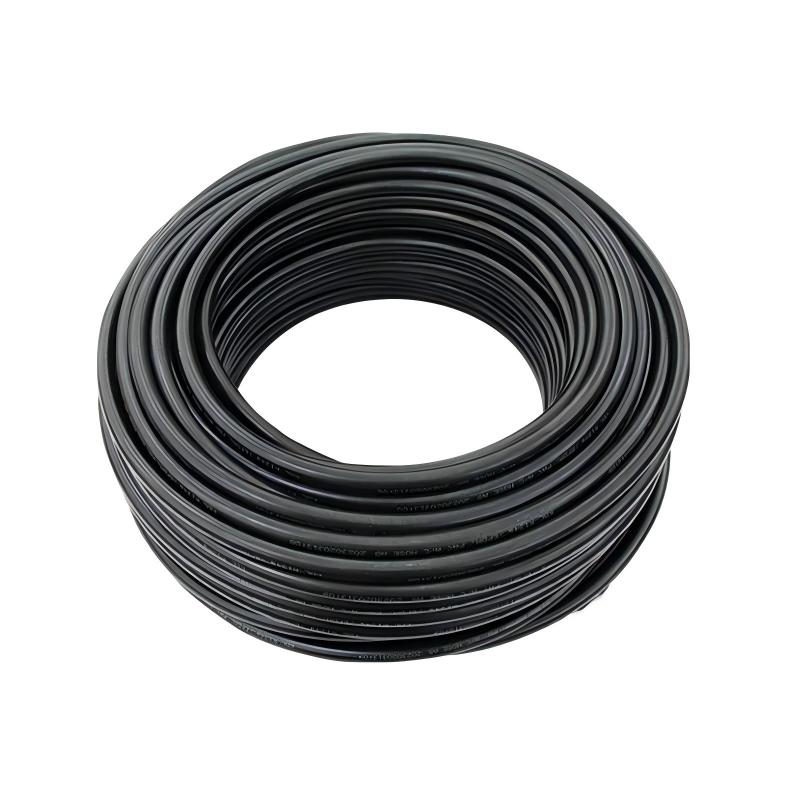
Why Application-Specific Selection Matters
A hose suitable for a passenger car is not automatically suitable for a bus or refrigerated truck. Differences in pressure, routing distance, connection arrangements, vibration and temperature exposure must be evaluated before selecting an alternative product.
What to Check When Purchasing Automotive AC Hoses in Bulk
For distributors, importers and automotive parts wholesalers, bulk purchasing requires consistent specifications and reliable product verification. Checking the following details before confirming an order helps reduce mismatches, installation problems and quality disputes.
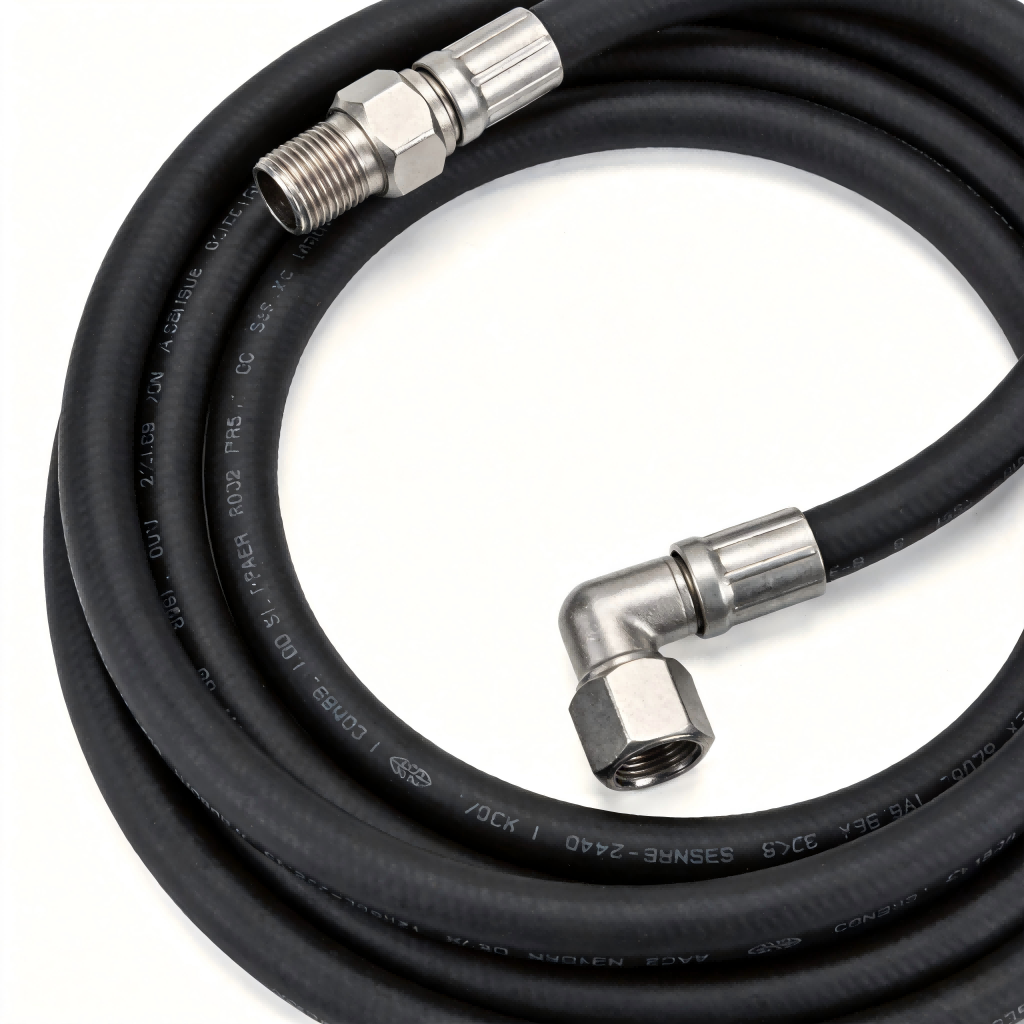
Automotive AC hose assembly with metal connection fittings.
1. Verify Hose and Fitting Compatibility
When purchasing complete automotive AC hose assemblies, the hose body and end fittings must be evaluated as one system. The correct hose diameter alone does not guarantee that an assembly will fit the original vehicle installation.
- Check fitting material, shape, angle and connection thread.
- Confirm O-ring or other specified sealing interfaces.
- Verify the overall assembly length and routing requirements.
- Check crimping compatibility and assembly pressure requirements.
2. Review the Main Quality Inspection Points
Verify inner diameter, outer diameter, wall thickness and overall length against the approved drawing.
Check the specified inner tube, barrier, reinforcement and outer cover materials.
Review the applicable pressure and leakage test requirements for the hose or completed assembly.
Check fitting position, crimp dimensions, connection condition and sealing surfaces.
Look for visible cracks, cuts, surface defects, deformation and contamination.
Compare product identification, dimensions, materials and inspection records across production batches.
3. Confirm the Applicable Automotive Hose Standards
Standards should be checked according to the actual product supplied. SAE J3062 addresses automotive refrigerant air-conditioning hose requirements, while SAE J2064 addresses coupled automotive refrigerant air-conditioning hose assemblies. A hose specification and an assembly specification are not interchangeable.
Before placing a bulk order, confirm the applicable standard edition, refrigerant designation, test requirements and supporting documentation with the supplier. Do not rely on a general standard number printed on a product description as the only evidence of compliance.
4. Keep Product Specifications Consistent Between Orders
For repeat purchasing, retain an approved specification covering hose type, dimensions, refrigerant, material construction, connection configuration and applicable inspection requirements. This provides a clear reference for comparing future deliveries and identifying specification changes.
Automotive Air Conditioning Hose FAQ
Find practical answers to common questions about automotive AC hose selection, refrigerant compatibility, installation, bulk purchasing and product quality.
1. How do I choose between Type C and Type E automotive AC hoses?
The choice depends on the specified hose design, dimensions, refrigerant compatibility, pressure requirements and installation conditions. JUNZE offers both Type C and Type E automotive air conditioning hoses in different sizes. Type E product information describes a four-layer reinforced construction, while Type C product listings include multiple bore sizes and low-permeation designs. Buyers should compare the actual product specifications instead of assuming that one type is suitable for every AC circuit.
2. Can the same automotive AC hose be used for R134a and R1234yf refrigerants?
Not automatically. Refrigerant compatibility depends on the hose materials, barrier construction, lubricant and the applicable system requirements. Some JUNZE product listings identify compatibility with both R134a and R1234yf, but this should be confirmed for the exact model and assembly before ordering. Do not assume that a hose marked for one refrigerant is automatically suitable for another.
3. What should distributors check when sourcing automotive AC hoses in multiple diameters?
Distributors should confirm the inner diameter, outer diameter, wall thickness, length, refrigerant compatibility and intended pressure application for every size. Different diameters should be treated as separate product specifications rather than interchangeable alternatives. Maintaining clear model identification and dimensional records also helps reduce stock selection errors when supplying different vehicle applications.
4. Which AC hose characteristics matter most for refrigerated trucks operating in cold climates?
Low-temperature flexibility, refrigerant compatibility, pressure resistance and sealing performance are important considerations. Refrigerated trucks may experience extended operation, temperature changes and continuous road vibration. The selected hose must be suitable for the lowest expected operating temperature and the actual refrigeration system. JUNZE offers refrigerated vehicle air conditioning hoses intended for cold-chain transport applications, with model-specific specifications that should be checked before selection.
5. What should be considered when replacing an AC hose in a bus engine compartment?
The replacement must match the original routing, hose length, fitting positions and connection interfaces. Engine compartment applications also require attention to heat exposure, vibration, abrasion and bending conditions. A hose that fits the connection points but cannot maintain the required bend radius may experience premature damage. Compare the original assembly and its installation position before approving a replacement.
6. Why is a nylon barrier layer important in an automotive refrigerant hose?
A nylon barrier layer helps reduce refrigerant permeation through the hose wall. This is important because excessive refrigerant loss can reduce system charge and affect cooling performance. Barrier material, thickness and compatibility should be evaluated as part of the complete hose construction. JUNZE's bus AC hose information identifies a PA nylon inner barrier in its described four-layer construction.
7. What information should I provide when ordering complete automotive AC hose assemblies?
Prepare the hose type, refrigerant, operating pressure, internal diameter, overall length and required fitting details. For replacement assemblies, photographs showing both end fittings and the overall hose routing can help clarify the configuration. For bus AC hose assemblies, JUNZE's product information identifies aluminum or steel fittings, high-pressure and low-pressure configurations, and custom lengths. Final compatibility should be confirmed against the application requirements.
8. What is the difference between SAE J2064 and SAE J3062 for automotive AC hoses?
SAE J3062 addresses the requirements for automotive refrigerant air-conditioning hose, while SAE J2064 addresses coupled automotive refrigerant air-conditioning hose assemblies. A hose meeting J3062 does not automatically mean that a completed assembly meets J2064. Importers and OEM buyers should identify whether they are purchasing bulk hose or a finished hose assembly and request the corresponding evidence of compliance.
9. Which quality checks should be reviewed before accepting a bulk AC hose shipment?
Buyers should review dimensional consistency, material identification, external appearance, pressure-related test records and, where applicable, assembly crimping and leakage test results. The inspection criteria should correspond to the approved product drawing and applicable standard. For repeat orders, compare batch identification and inspection documentation with the approved sample to help maintain consistent purchasing specifications.
10. Can automotive AC hose assemblies be supplied with different fittings and lengths?
Assembly configurations depend on the product range and manufacturing specifications. JUNZE's bus AC hose assembly product information identifies aluminum and steel fitting options, high-pressure and low-pressure configurations, and custom lengths for different bus routing requirements. Buyers should confirm the available fitting configuration, dimensions and assembly requirements for the specific product before proceeding with a bulk order.
Explore Our Automotive AC Hose Range
Explore our different automotive air conditioning hose solutions for passenger vehicles, buses and refrigerated transport applications.