


Teflon Brake Hose
PTFE brake hose — also called Teflon brake hose — uses a PTFE inner tube that does not expand under pressure, giving you a firmer pedal and consistent braking. JUNZE's SAE J1401 brake hose range features 304 stainless steel braided construction, handling -65°C to 260°C with up to 14,000 PSI burst pressure. Options include PTFE, Nylon 12, and standard nylon cores, available as bulk hose or custom brake hose assemblies with banjo fittings. All meet DOT FMVSS 106. Contact us for your requirements.
Brake Hose Construction: How Reinforcement Layers Support Reliable Performance
Automotive brake hoses combine an inner rubber tube, reinforcement and an outer protective cover. Each layer performs a specific function in fluid transmission, pressure resistance and protection against external exposure.
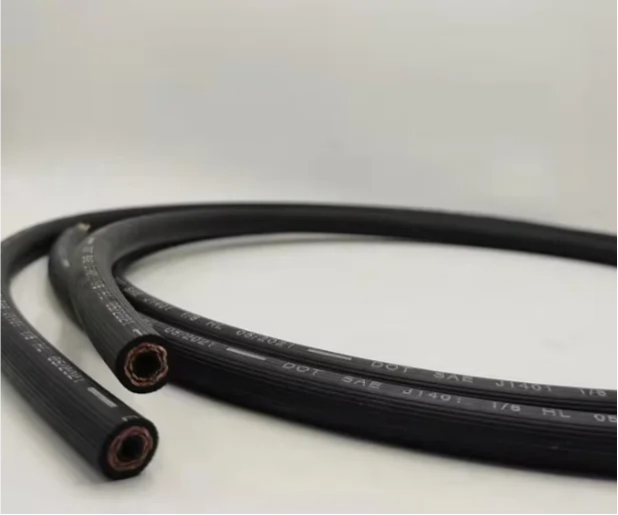
Three Main Construction Layers
01. Rubber Inner Tube
The inner tube forms the passage for hydraulic brake fluid. Its material must be suitable for the specified brake fluid and operating conditions.
02. Multi-Strand Fiber Reinforcement
The braided fiber reinforcement helps the hose withstand internal hydraulic pressure while maintaining its flexible construction.
03. Ozone-Resistant Rubber Cover
The outer cover protects the hose body and reinforcement against environmental exposure, including ozone and external wear.
Why Does Reinforced Construction Matter?
Brake hoses operate in environments involving pressure changes, temperature fluctuations and vehicle movement. The inner tube, reinforcement and outer cover must work together. When evaluating a hydraulic brake hose manufacturer, buyers should check the material construction, dimensional consistency and relevant performance test documentation rather than judging the product by its external appearance alone.
Hydraulic vs. Air Brake Hoses: Which Type Does Your Vehicle System Require?
Hydraulic brake hoses and air brake hoses serve different braking systems. The key distinction is their working medium: hydraulic hoses transfer brake fluid, while air brake hoses carry compressed air.
Hydraulic Brake Hose
Transfers pressurized brake fluid between rigid brake lines and hydraulic braking components such as calipers or wheel cylinders.
Typical applications: Passenger cars, motorcycles and vehicles equipped with hydraulic braking systems.
Air Brake Hose
Carries compressed air through pneumatic braking circuits to operate air brake components.
Typical applications: Heavy-duty trucks, buses, trailers and other commercial vehicles equipped with air brakes.
| Comparison | Hydraulic Brake Hose | Air Brake Hose |
|---|---|---|
| Working medium | Brake fluid | Compressed air |
| Brake system | Hydraulic braking | Pneumatic braking |
| Common vehicle applications | Passenger cars and motorcycles | Trucks, buses and trailers |
| Relevant standard reference | SAE J1401 | SAE J1402 |
| Important selection factors | Fluid compatibility, bore, pressure, temperature and fittings | Air pressure, temperature, dimensions and connections |
Important for buyers: These two hose types are not interchangeable. SAE J1401 and SAE J1402 address different product applications. Always confirm the vehicle braking system and applicable product specifications before placing a bulk order.
Hydraulic Brake Hose Specifications and Quality Checks for Bulk Buyers
For automotive brake hose sourcing, buyers need to verify more than the nominal diameter. Inner diameter, outer diameter, wall thickness, burst pressure and product identification all contribute to specification control.
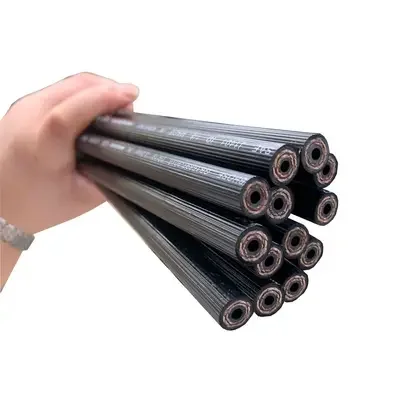
Available Hydraulic Brake Hose Sizes
Our hydraulic brake hose catalogue includes nominal bore options of 3.2mm, 4.8mm and 6.3mm. The appropriate specification must be confirmed against the intended application and the detailed product dimensions.
The following figures are taken from our published hydraulic brake hose dimensional specifications. They should be checked against the selected model before order approval.
| Nominal Bore | Listed ID (mm) | OD (mm) | Wall Thickness (mm) | Minimum Burst Pressure (MPa) |
|---|---|---|---|---|
| 3.2mm (1/8") | 3.35 ± 0.15 | 10.5 ± 0.2 | 3.65 | 80 |
| 4.8mm (3/16") | 4.8 ± 0.2 | 12.5 ± 0.3 | 3.85 | 60 |
| 6.3mm (1/4") | 6.1 ± 0.2 | 15 ± 0.4 | 3.65 | 50 |
Note: These are published catalogue dimensional and minimum burst-pressure figures for the listed hydraulic hose specifications. Minimum burst pressure is not the same as working pressure. Confirm the exact model, test conditions and applicable product documentation before using these figures for engineering approval.
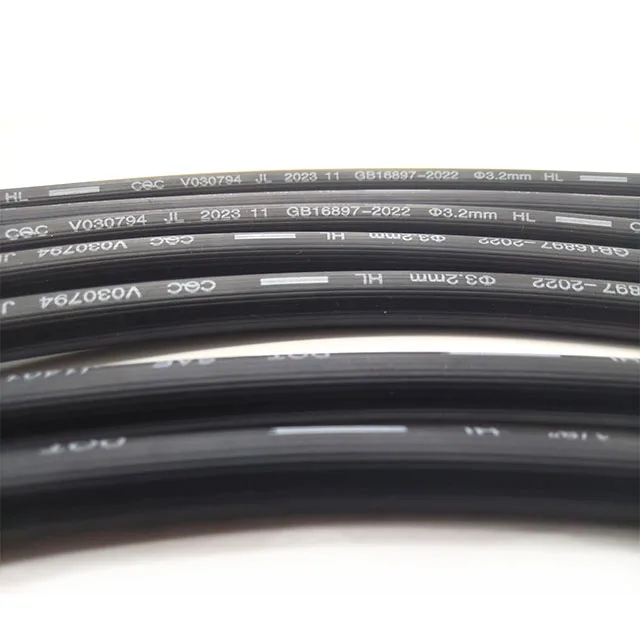
Product Marking and Traceability
Product markings provide useful identification information for buyers and distributors. During incoming inspection, check the hose markings against the approved product specification, including the declared standard and relevant product identification details.
Four Quality Checks Before Approving a Bulk Order
Dimensional Inspection
Check inner diameter, outer diameter, wall thickness and dimensional tolerances against the approved specification.
Construction Verification
Verify the inner rubber tube, fiber reinforcement and outer cover against the specified construction.
Performance Testing
Review relevant pressure and performance test records, including burst-pressure requirements where applicable.
Marking and Batch Consistency
Check product identification, packaging and batch records against the approved sample and purchase specifications.
Brake Hose Purchasing and Technical FAQs
These answers address practical questions about hydraulic brake hose construction, specification verification, product standards and quality management for automotive parts distributors, importers and bulk buyers.
1. When should a vehicle use a flexible brake hose instead of a rigid brake line?
Flexible brake hoses are generally used where relative movement occurs between vehicle components, such as between the body and moving suspension or steering assemblies. Rigid brake lines are used along sections that do not require the same flexibility. When sourcing replacement hoses, confirm the original routing, connection positions and required hose length. The replacement must accommodate the intended vehicle movement without excessive bending, twisting or contact with nearby components.
2. Why should buyers check both inner and outer diameters when selecting hydraulic brake hoses?
Inner diameter identifies the internal passage, while outer diameter and wall thickness affect the overall hose dimensions and installation compatibility. A hose with the correct nominal bore may still differ in its external dimensions. For replacement and assembly projects, compare the full dimensional specification rather than selecting by inner diameter alone. This is particularly important for distributors purchasing several hose sizes for different vehicle applications.
3. Does a higher burst pressure automatically mean a better hydraulic brake hose?
No. Minimum burst pressure is one performance indicator, not a complete measure of brake hose quality. Buyers should also evaluate pressure expansion, dimensional consistency, temperature resistance, material compatibility and the applicable performance standard. A hose must satisfy the requirements of its intended application. Selecting a product based only on the highest burst-pressure figure may overlook other important operating and compliance requirements.
4. Can hydraulic brake hoses rated from -48°C to +120°C be used in every vehicle environment?
The published -48°C to +120°C range applies to the specified JUNZE hydraulic brake hose catalogue products. It should not automatically be applied to every hose model or vehicle application. Buyers should compare the actual operating temperature, brake fluid compatibility, installation location and relevant product documentation before selecting a hose. Temperature suitability must be evaluated together with the other performance requirements.
5. Why is ozone resistance important for brake hoses stored by automotive parts distributors?
Brake hoses can be exposed to environmental conditions during storage and distribution, even before installation. Ozone exposure can contribute to deterioration of susceptible rubber surfaces. An ozone-resistant outer cover helps protect the hose against this type of environmental exposure. Distributors should also follow suitable storage practices and inspect packaging and hose surfaces before releasing products for sale.
6. How can importers distinguish SAE J1401 hydraulic brake hoses from SAE J1402 air brake hoses?
The first step is to identify the braking system. SAE J1401 relates to hydraulic brake hose assemblies for road vehicles using specified non-petroleum-base hydraulic brake fluids. SAE J1402 addresses automotive air brake hoses. Buyers should check the declared product type, markings, technical specifications and supporting test documentation. These standards address different applications and should not be treated as interchangeable when purchasing mixed automotive hose products.
7. What should distributors inspect when receiving a new batch of hydraulic brake hoses?
Start by comparing the delivered product with the approved specification and sample. Check hose dimensions, external surface condition, printed identification, packaging and product quantity. Review the relevant inspection and performance test records, including pressure-related results where required. For repeat purchasing, maintaining approved samples and consistent product identification helps reduce specification differences between batches.
8. What manufacturing stages should buyers understand when evaluating a hydraulic brake hose supplier?
The published JUNZE hydraulic brake hose process includes rubber extrusion, multi-strand fiber braiding, vulcanization and coiling. For finished brake hose assemblies, fitting connection and crimping are additional operations. Understanding these stages helps purchasing teams evaluate whether a supplier can control the hose construction and, where assemblies are required, the connection process. Buyers should request relevant process and inspection documentation when evaluating a new supplier.
9. Which documents should overseas buyers request when importing brake hoses for regulated markets?
The required documentation depends on the destination market, product type and purchasing contract. Buyers should identify the applicable product standard, request relevant conformity or certification documents where applicable, and verify product-specific test records and dimensional specifications. For JUNZE's listed hydraulic brake hose range, the product information identifies SAE J1401, GB 16897, CCC (3C) and CQC. The specific document scope and validity should be confirmed for the product and destination market before shipment.
10. How can automotive parts wholesalers maintain consistent brake hose specifications across repeat orders?
Wholesalers should maintain an approved specification for each product model, including nominal bore, actual dimensions, material construction, pressure requirements, temperature range and applicable standards. Keep reference samples, product drawings and packaging details where relevant. Before confirming repeat orders, compare the current production specification with the approved version and document any changes. At JUNZE, we manufacture hydraulic brake hoses and support bulk supply for automotive and motorcycle applications. Product specifications and order arrangements can be confirmed with our team before production.
Explore Related Brake Hose Products
Explore our related automotive brake hose products to identify the appropriate hose type, connection components and finished assemblies for your sourcing requirements.