


Automotive hoses
All hoses feature high-strength reinforced construction, excellent sealing, pressure resistance, aging resistance and long service life. Strictly manufactured to international automotive standards, they effectively ensure driving safety, system stability and overall vehicle performance.
Automotive Hose Types and Their Applications
Automotive hoses are designed for different vehicle systems and working conditions. At JUNZE, our main automotive hose ranges cover hydraulic and air brake applications as well as vehicle air conditioning systems. Understanding their functions helps distributors and buyers identify the right product category.
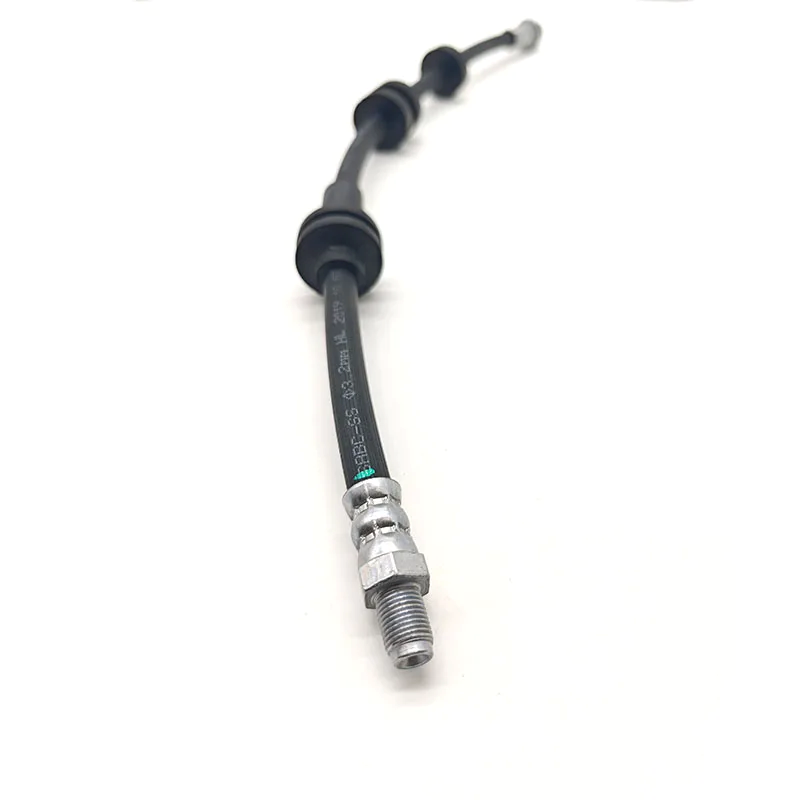
1. Automotive Brake Hoses
Brake hoses provide flexible connections within vehicle braking systems. Hydraulic brake hoses transfer pressurized brake fluid between rigid brake lines and moving components such as calipers or wheel cylinders. Air brake hoses serve compressed-air braking systems used in commercial vehicles.
Our brake hose range includes hydraulic brake hoses, brake hose assemblies, air brake hoses, brake hose fittings and Teflon brake hoses. Buyers should consider the working medium, internal diameter, hose length, fitting configuration and applicable performance requirements before selecting a product.
2. Automotive Air Conditioning Hoses
Automotive air conditioning hoses transport refrigerant through vehicle air conditioning circuits. Their construction must support refrigerant compatibility, pressure requirements, temperature changes and the routing conditions inside the vehicle.
JUNZE supplies Type C, Type E, flexible, refrigerated vehicle and bus air conditioning hoses. Different applications require different hose dimensions, construction designs and connection arrangements.
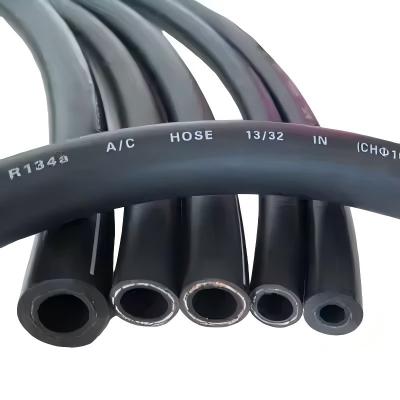
| Product Category | Main Function | Important Selection Factors |
|---|---|---|
| Hydraulic Brake Hose | Transfers hydraulic brake fluid pressure. | Bore, pressure, temperature, construction and fittings. |
| Air Brake Hose | Transfers compressed air in pneumatic braking systems. | Air pressure, dimensions, connections and vehicle application. |
| Teflon Brake Hose | Provides a PTFE-based hose solution for specified applications. | Core material, reinforcement, temperature and fittings. |
| Automotive AC Hose | Transports refrigerant through air conditioning circuits. | Refrigerant, pressure, diameter and hose construction. |
Automotive Hose Construction and Manufacturing
Hose construction affects pressure resistance, flexibility, sealing performance and service suitability. The reinforcement and inner tube materials must be selected according to the working medium and operating conditions of each automotive system.
Hydraulic Brake Hose Construction
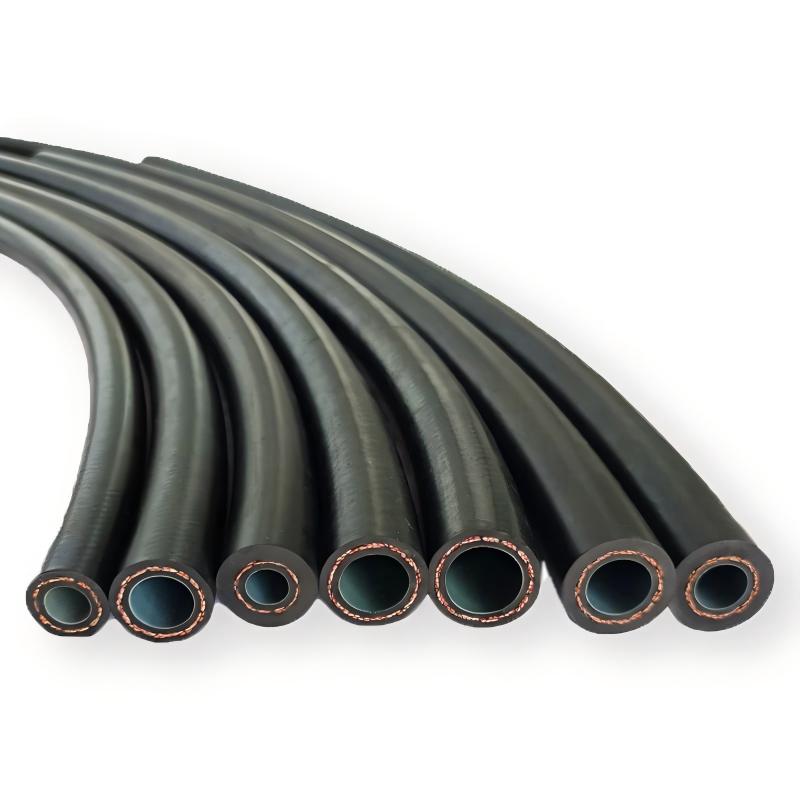
Hydraulic brake hose cross sections showing the reinforced hose construction.
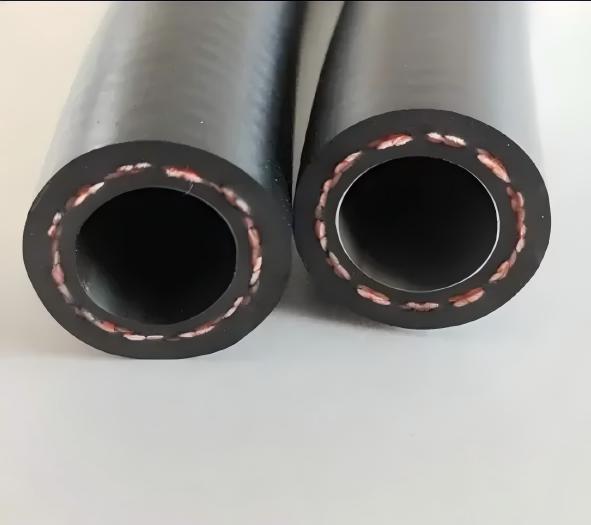
Our hydraulic brake hose construction uses a rubber inner tube, multi-strand fiber reinforcement and an ozone-resistant rubber outer cover. Each layer performs a different function within the hose assembly.
Provides the internal passage for hydraulic brake fluid.
Provides reinforcement to help the hose withstand hydraulic pressure.
Protects the reinforcement and hose body against external exposure, including ozone.
Automotive AC Hose Construction
Our bus air conditioning hose product information describes a four-layer construction consisting of an outer EPDM layer, PET reinforcement, a middle EPDM layer and an inner PA nylon barrier. This construction is designed for refrigerant transportation and the operating conditions of vehicle AC systems.
The nylon barrier helps reduce refrigerant permeation, while the reinforcement contributes to pressure resistance. The rubber layers provide the hose body and external protection.
Different AC hose models may use different construction designs. Buyers should confirm the specific model, layer configuration and refrigerant compatibility before placing an order.
Hydraulic Brake Hose Manufacturing Process
Our hydraulic brake hose manufacturing process follows a defined sequence from hose body production to final fitting assembly. Each stage contributes to dimensional consistency and product performance.
Forms the inner rubber hose body.
Adds multi-strand reinforcement.
Completes the rubber curing process.
Connects the specified metal end fittings.
This sequence describes our hydraulic brake hose process. Air conditioning hoses have their own construction and production requirements.
How to Select Automotive Hoses for Bulk Purchasing
Selecting automotive hoses for wholesale distribution or vehicle production requires more than matching a product name. Buyers should verify dimensions, working conditions, connection details and applicable standards for each hose application.
1. Confirm the Hose Application
First identify whether the hose is intended for hydraulic braking, pneumatic braking or air conditioning. These applications use different working media and construction requirements. A brake hose should never be selected solely because its external dimensions resemble an AC hose.
2. Check Inner Diameter and Outer Diameter
Inner diameter affects the available flow passage, while outer diameter is important for fitting compatibility and installation space. Our hydraulic brake hose catalogue includes 3.2mm, 4.8mm and 6.3mm internal diameter options. The correct bore should be selected according to the intended vehicle system rather than assumed from the vehicle category alone.
3. Evaluate Pressure and Temperature Requirements
Brake and AC hoses operate under different pressure and temperature conditions. Buyers should distinguish between working pressure, minimum burst pressure and temperature range. For air conditioning applications, the high-pressure or low-pressure circuit must also be identified before choosing the hose.
4. Verify Materials and Fluid Compatibility
The inner tube must be compatible with the fluid or refrigerant passing through the hose. Reinforcement and outer cover materials must also suit the pressure, temperature, vibration and environmental exposure. For AC hoses, confirm the refrigerant type and model-specific construction.
5. Confirm Hose Length and End Fittings
For assembled hoses, check overall length, fitting type, thread specifications, orientation and installation position. An assembly with the correct hose diameter may still be unsuitable if the connection geometry does not match the vehicle.
6. Check Applicable Standards and Inspection Records
Confirm the applicable standard for the specific hose and assembly. SAE J1401 addresses hydraulic brake hose assemblies, while SAE J2064 addresses coupled automotive refrigerant air conditioning hose assemblies. Request the relevant product documentation and test records rather than assuming that one standard applies to every automotive hose.
Bulk Purchasing Information Checklist
| Information | What Buyers Should Confirm |
|---|---|
| Product Type | Hydraulic brake, air brake or air conditioning hose. |
| Dimensions | Inner diameter, outer diameter, wall thickness and length. |
| Operating Conditions | Working pressure, temperature and application environment. |
| Material | Inner tube, reinforcement and outer cover construction. |
| Connections | Fitting type, thread, angle and assembly configuration. |
| Compliance | Applicable product standard and supporting inspection documents. |
| Packaging | Bulk coils, cut lengths, assembled products or export cartons. |
For repeat orders, keeping approved product specifications, fitting drawings and sample references helps buyers maintain consistency across replenishment batches. At JUNZE, we support automotive hose purchasing for different vehicle applications and product requirements.
Automotive Hoses: Frequently Asked Questions
Find practical answers to common questions about automotive brake hoses, air conditioning hoses, product selection, quality requirements and bulk purchasing.
1. How can buyers distinguish hydraulic brake hoses from air brake hoses?
The main difference is the working medium and braking system. Hydraulic brake hoses transfer pressurized brake fluid, while air brake hoses carry compressed air in pneumatic braking systems, commonly used in commercial vehicles. Their materials, pressure requirements, connection structures and applicable standards are not interchangeable. Buyers should identify the vehicle braking system before requesting a quotation.
2. Which hydraulic brake hose diameter should distributors stock for different vehicle markets?
JUNZE's hydraulic brake hose catalogue includes 3.2mm, 4.8mm and 6.3mm internal diameter options. The appropriate assortment depends on the vehicle applications and replacement demand in your market. Rather than assigning a bore to every vehicle based only on its category, verify the original hose dimensions, connection details and product specifications. Distributors can use actual sales records to determine a suitable stock mix.
3. Can automotive air conditioning hoses be used for refrigerated trucks and buses?
Yes, but the hose must be designed for the specific air conditioning system. Bus AC hoses and refrigerated vehicle AC hoses have different installation environments, routing requirements and operating conditions. Refrigerant compatibility, pressure, hose diameter, temperature range and connection arrangements should all be checked. We supply dedicated bus and refrigerated vehicle air conditioning hose options for these applications.
4. What should buyers consider when selecting AC hoses for R134a and R1234yf refrigerants?
Refrigerant compatibility should be confirmed against the exact hose model and its supporting documentation. Buyers should also check refrigerant permeation requirements, pressure, temperature, inner diameter and whether the product is a bulk hose or a coupled assembly. JUNZE's bus AC hose product range lists compatibility with R134a and R1234yf for the specified models. Do not assume that every AC hose is automatically compatible with every refrigerant.
5. Why do brake hose assemblies need the correct fitting angle and overall length?
The fitting angle and hose length determine how the assembly connects to the vehicle and follows its installation route. An incorrect angle can cause connection misalignment, while an unsuitable length can create excessive bending, tension or contact with nearby components. For OE replacement orders, buyers should provide the original part number, a technical drawing or a physical sample to verify the assembly configuration.
6. What is the difference between bulk brake hose and a finished brake hose assembly?
Bulk brake hose is supplied as hose material, usually in coils or specified lengths, and requires suitable fittings and assembly operations. A finished brake hose assembly includes the hose and its end fittings, connected to the required configuration. Bulk hose can suit buyers with their own assembly facilities, while finished assemblies are more convenient for distributors and replacement-part suppliers that need ready-to-install products.
7. Which quality checks should importers request before approving an automotive brake hose supplier?
Buyers should evaluate dimensional consistency, material construction, fitting crimping, pressure performance, identification markings and relevant standard compliance. For hydraulic brake hose assemblies, SAE J1401 provides requirements and test methods for the applicable product category. We operate testing equipment meeting SAE J1401 requirements and manufacture hydraulic brake hoses using extrusion, fiber braiding, vulcanization and fitting crimping processes. Buyers should request product-specific inspection records when evaluating a particular order.
8. What information should distributors provide when ordering mixed automotive hose models in bulk?
A useful purchase list should identify each hose category, model, internal and external diameter, length, application, fitting configuration and required quantity. For AC hoses, include the refrigerant and pressure circuit. For brake hose assemblies, include the OE reference or fitting details. Separating product specifications by model helps reduce ordering mistakes and makes production planning, inspection and replenishment easier.
9. Can JUNZE supply automotive hoses with customized dimensions and private-label packaging?
We provide OEM/ODM and customization services for automotive brake products, with product requirements evaluated according to drawings, samples and vehicle application information. Our website also presents private-label brake hose products and customized packaging options. Buyers should confirm the specific hose category, available dimensions, branding requirements, packaging design and order quantity with our team before production.
10. How can automotive parts distributors maintain consistent quality across repeat hose orders?
Distributors should maintain approved samples, product drawings, dimensional specifications, fitting references and applicable test requirements for each model. Repeat orders should be checked against the same approved specifications, with clear identification of any requested changes. We support bulk and multi-model automotive hose purchasing, and our production capacity includes an annual hose output of approximately 8 million meters. Buyers can discuss their replenishment requirements and product assortment with us.
Explore JUNZE Automotive Hose Products
Explore our related product ranges and manufacturing services to find suitable automotive hose solutions for your business.